
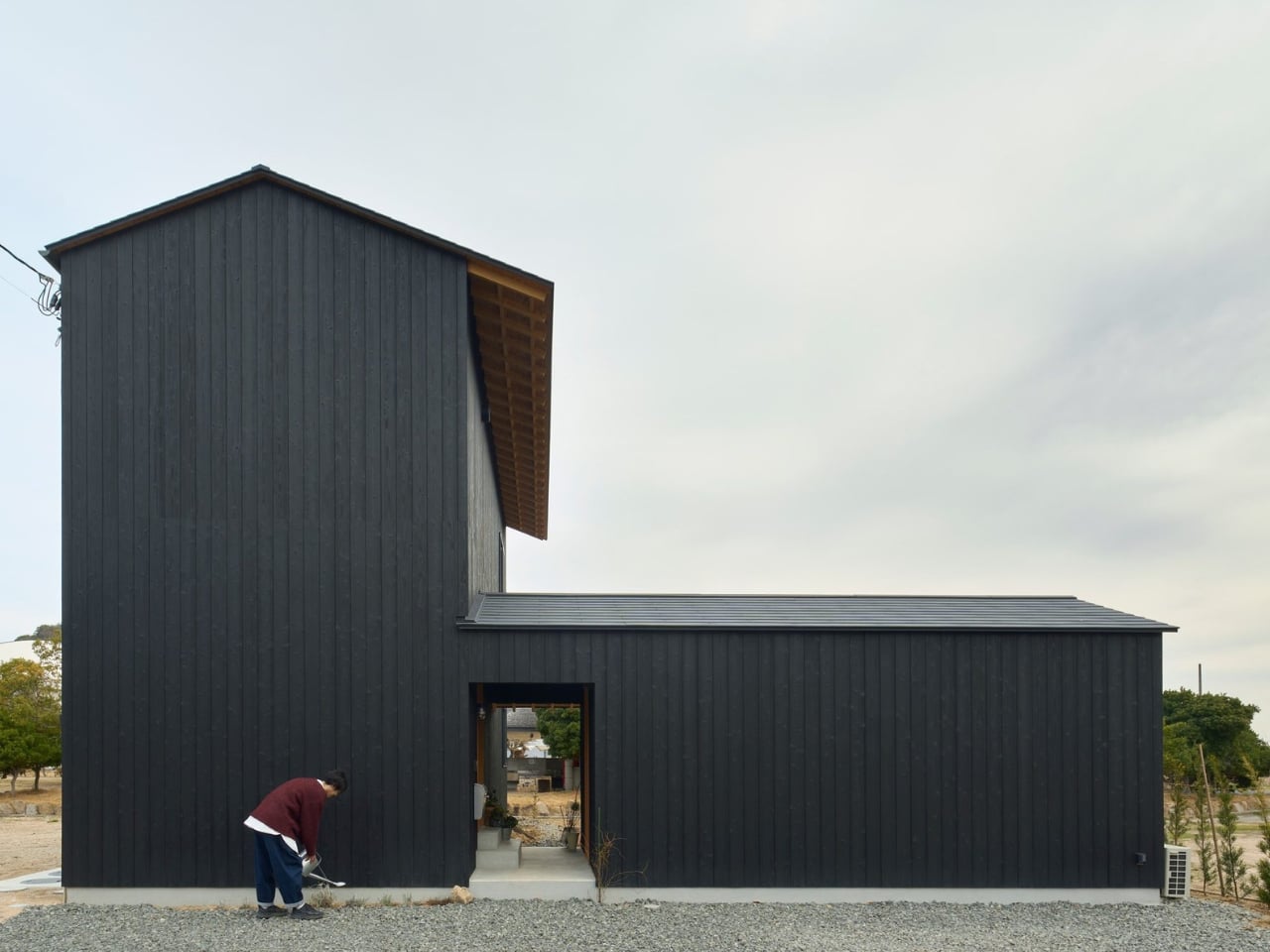
Sometimes the best architecture knows when to turn away. UK studio Denizen Works just completed their first project in Japan, and it does exactly that. The House in Onomichi presents an almost entirely blank facade to the street, creating what founder Murray Kerr calls an “enigmatic quality.” But this isn’t architecture being rude. It’s architecture understanding that privacy can be the ultimate luxury.
The clients are a couple who spent years living in London before deciding to return to Japan for a quieter life. What they wanted wasn’t just a house but a private sanctuary, and Denizen Works delivered by looking backward and forward at the same time. The design references traditional Japanese residential arrangements while feeling completely contemporary, which is the sweet spot where the best cultural translations happen.
Designer: Denizen Works
The house is split into two distinct structures connected by a covered entrance walkway. There’s a two-storey main house containing a single bedroom, and a single-storey studio that extends from it, partially enclosing a small garden. This arrangement follows the traditional Japanese concept of Omoya and Hanare, which translates roughly to main house and annexe. In this case, the separation creates a clear division between living and working, which anyone who has tried to work from home during the past few years knows is absolutely essential for sanity.
The real star of the show is the cladding. Both structures are wrapped in vertical burnt-timber Yakisugi, a traditional Japanese technique that involves charring wood to preserve it. The result is a deep black finish that’s both protective and beautiful. Yakisugi has been having a moment in contemporary architecture, but here it feels completely appropriate rather than trendy. The technique originated in Japan centuries ago, and using it for a house in Onomichi creates a visual conversation between old and new.
What makes this project particularly interesting is how it handles the relationship between inside and outside. The street-facing side might be closed off, but the other side opens up completely to capture views of the Setonaikai islands. It’s a classic move in Japanese architecture, this idea of creating a private world within a public context. The garden, small as it might be, becomes a buffer zone that allows the interior to breathe without sacrificing the sense of enclosure.
The collaboration aspect deserves attention too. Denizen Works worked with Tokyo-based Take Architects on the project, and you can see how that partnership allowed a UK studio to navigate the complexities of building in Japan while still maintaining their design vision. Cross-cultural architectural collaborations can sometimes feel like compromise stacked on compromise, but this one seems to have found genuine synthesis.
For a practice known for their thoughtful residential work in the UK, this first Japanese project shows that good architecture can translate across cultures when it’s rooted in understanding rather than imposition. The clients wanted calm, privacy, and a connection to place. They got a house that uses traditional materials and spatial concepts but doesn’t feel like it’s playing dress-up. The burnt timber will weather and age, the garden will grow in, and the whole thing will settle into its context over time.
There’s something appealing about architecture that doesn’t shout. In an era where so much residential design seems desperate for Instagram likes, a house that presents a closed face to the street and saves its drama for private moments feels almost radical. The blank facade isn’t about being mysterious for the sake of it. It’s about creating the conditions for a specific kind of life, one where the views of the Setonaikai islands matter more than the views from the street.
This is Denizen Works understanding that when clients say they want calm, they mean it. And sometimes the best way to achieve that is to build a beautiful wall and focus all the energy on what happens behind it.
The post This Japanese House Hides From the Street, Opens to the Sea first appeared on Yanko Design.