
Around 285 million people worldwide live with visual impairment, according to the World Health Organization, and something as routine as checking the time can become a daily negotiation between independence and assistance. How do blind people tell time without relying on someone else? The traditional watch for the visually impaired has long answered that question through sound or exaggerated tactile cues. Yet many of these solutions, while functional, visibly signal that they are assistive devices. The lingering design question is simple: why can’t a watch for the visually impaired look like any other watch?
The current landscape offers a mix of approaches. Talking watches announce the time aloud at the press of a button, prioritizing clarity over discretion. The classic braille watch uses raised numerals beneath a hinged crystal cover that flips open, allowing users to feel the dial directly. Brands like Citizen have explored tactile adaptations within more mainstream aesthetics, but even these models often compromise on visual subtlety or require noticeable interaction. The tactile watch concept has existed for decades, yet many designs still feel engineered first for utility and second for style. For a wristwatch for blind people, that trade-off can unintentionally reinforce differences.
Designer: Jinkyo Han
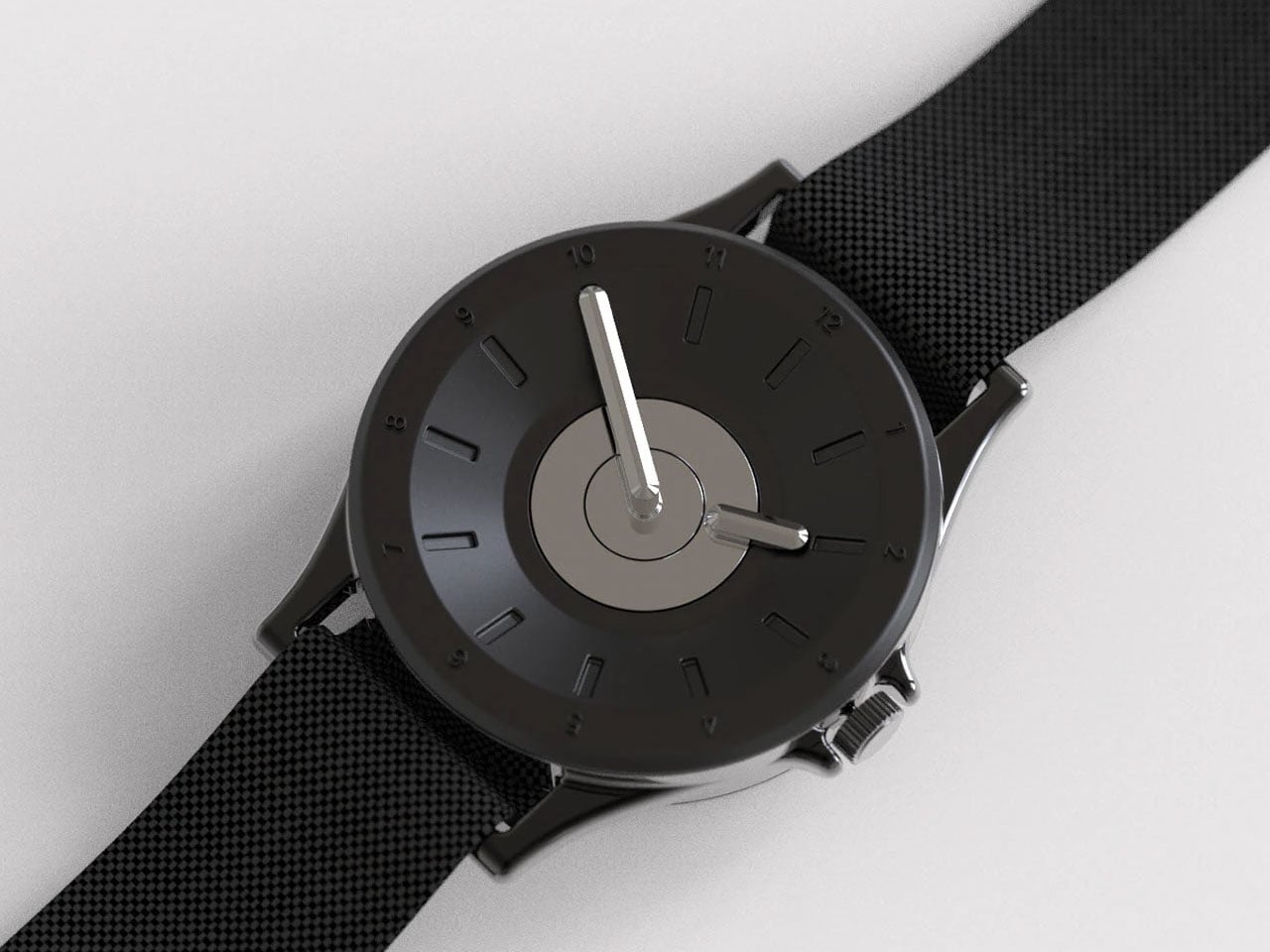
A new concept christened “Wristwatch for the Blind,” rethinks the tactile watch for the visually impaired through restraint rather than amplification. Instead of adding bulky covers, voice modules, or overt braille markers, the designer retains a conventional analog form. At first glance, it resembles a standard minimalist timepiece with a clean dial and classic proportions. The innovation lies in the details: raised numerals and subtly ridged hands that can be read by touch. By tracing a fingertip along the dial, the wearer can feel the position of the hour and minute hands in a natural circular motion. The tactile elements are integrated into the geometry of the watch itself, allowing it to function as an accessible timepiece without announcing its purpose. It is an inclusive watch design that communicates through texture rather than technology.
That discretion is what makes the concept compelling. Inclusive design succeeds when it removes stigma instead of adding layers of accommodation. The most effective accessible products often become invisible in the best way, serving everyone without labeling anyone. An accessible watch design that mirrors mainstream aesthetics follows the same philosophy. It supports independence for users who are blind or visually impaired while preserving personal style and social ease. In doing so, it reframes assistive technology as simply good design.
The concept remains a proposal rather than a commercial product, but it points toward a future where adaptive wearables blend effortlessly into everyday life. As interest in tactile watch solutions continues to grow, there is clear room for designs that balance dignity with functionality.
The post This wristwatch lets blind people tell time by touch, looks like any other timepiece first appeared on Yanko Design.