
A domestic driving simulator shaped by abstract geometries
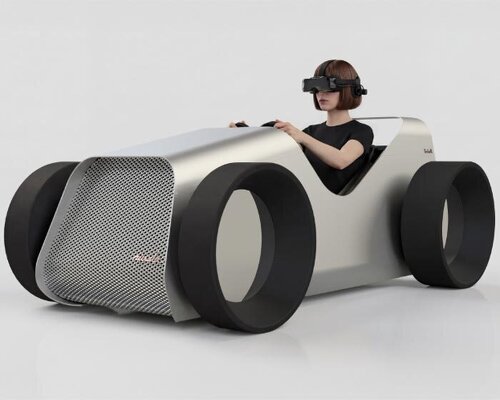
Nivola is a home driving simulator designed by Adriano Design to integrate technologically complex systems within a domestic environment. The project addresses the relationship between performance-driven devices and the formal, spatial, and symbolic qualities of interior spaces.
Contemporary driving simulators are typically composed of exposed mechanical structures, visible wiring, and assembled components optimized for performance. While these configurations emphasize technical capability, they often lack coherence as objects within a living environment. Nivola redefines this typology by organizing and integrating its technical elements within a controlled and legible form.
Rather than replicating automotive aesthetics, the design adopts an abstract and archetypal language. The conceptual reference is the toy car, where simplified geometries and minimal formal cues evoke movement and interaction. This approach informs the overall composition, positioning the simulator as both a functional device and a spatial object.
all images courtesy of Adriano Design
Aluminum and wood Shells turn a Simulator into a design Object
The structure is formed from curved planar surfaces, reducing formal complexity into a clear constructive system. The body is developed in two material variations: a 4 mm aluminum sheet version, emphasizing a technical character, and a curved plywood version that aligns more closely with domestic interiors. This adaptability allows the object to respond to different spatial contexts while maintaining a consistent formal identity.
The design prioritizes visual clarity by concealing functional complexity within the overall volume. Components are integrated to minimize visual fragmentation, allowing the simulator to read as a cohesive object rather than a collection of parts. This approach aligns the project with furniture design, positioning it within the language of the interior rather than as standalone equipment.
Nivola, developed by Adriano Design Studio, proposes a redefinition of the driving simulator as a domestic object, where performance, material expression, and spatial integration are addressed simultaneously. The project frames design as a mediator between technological systems and everyday living environments.
the simulator is designed for integration within domestic interiors
a controlled form organizes complex technological systems
mechanical elements are concealed within a unified volume
the design redefines the visual language of driving simulators
the concept draws on the simplicity of toy car geometries
curved planar surfaces define the overall structure
the form is constructed through a clear geometric system
aluminum panels emphasize a technical material expression
a plywood version introduces a warmer, domestic character
material variation adapts the object to different interiors
the simulator reads as a single, continuous volume
technology and interior design are combined within a single system
project info:
name: Nivola
designer: Adriano Design | @adriano_design
design team: Davide Adriano, Gabriele Adriano – Adriano Design
designboom has received this project from our DIY submissions feature, where we welcome our readers to submit their own work for publication. see more project submissions from our readers here.
edited by: christina vergopoulou | designboom
The post toy car aesthetics inform domestic driving simulator made of curved aluminum and plywood appeared first on designboom | architecture & design magazine.