
philippe starck enters designboom’s room for dreams
During Milan Design Week, Philippe Starck sat down with designboom’s Editor-in-Chief Sofia Lekka Angelopoulou for a live conversation as part of ROOM FOR DREAMS, a takeover of ME Milan Il Duca.
Across the hotel’s Aldo Rossi-designed interiors, the program gathered installations, screenings, and talks into a space where subconscious dream states are celebrated as working tools. Here, Starck framed his practice through a statement that set the tone for the talk: ‘when I go to bed, I go to work.‘
Starck describes dreaming an active method that’s a part of his design process. Sleep becomes a space for production, where unfamiliar languages and inventions can be brought into existence. ‘I go to some place which doesn’t exist,‘ he tells designboom.
He describes encounters with ideas he has never seen before, and experiences that sit outside memory. These visions feed directly into his work, and shape how he approaches objects and spaces once he awakens and returns to his desk.
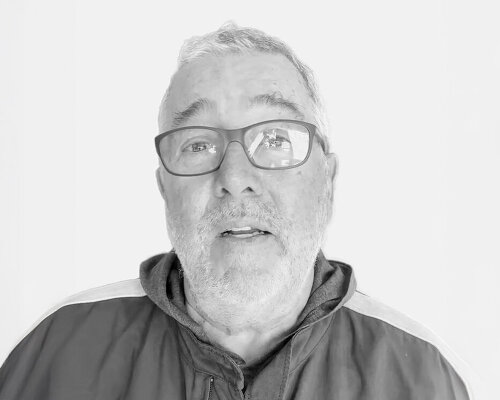
Philippe Starck, image courtesy Philippe Starck Design
reclaiming hope for utopia
Translating dream to design, Philippe Starck notes the role of intuition. He speaks of it with suspicion before trust, testing each instinct through work. The designer explains: ‘My real work at my desk is to check my intuition.‘ He frames design as a continuous verification of what emerges from the subconscious.
For him, intuition draws from a deeper layer of the mind, one that operates without the distortions of performance. Starck adds: ‘The subconscious doesn’t lie,‘ contrasting it with the constructed nature of conscious expression.
The conversation expands toward a larger cultural question which echoes designboom’s exploration of Utopia. He points to a shift in societal ambitions, noting that material desire has replaced more expansive visions of the future.
‘The biggest problem of our society today is there is no more utopia,‘ he says, calling for a renewed commitment to imagining and building better conditions. And so, his reflections connect directly to the premise of ROOM FOR DREAMS, where imagination is treated as a method that can shape reality when pursued with intent. Continue on to read the full conversation!
Maison Heler, Philippe Starck, Metz, France, 2025. image © Julius Hirtzberger
a dialogue with dreamer philippe starck
designboom (DB): Do your dreams influence your work?
Philippe Starck (PS): To speak frankly, when I go to bed, I say to my wife, I go to work. Even if it’s not comfortable, I know it will be harder. When I sleep, I go to some place which doesn’t exist, with air which doesn’t exist, with vibrations that don’t exist, with people I don’t know.
They speak languages that sometimes I don’t understand. They speak about things I cannot understand. I see incredible inventions. I see things I cannot imagine and I have never seen in my life. It’s not a memory, it’s something else. That’s why, definitely, my dreams are more interesting than my life.
AXIOM Space Station’s crew quarter habitation, Philippe Starck, 2018. image © Philippe Starck
DB: Do you trust your intuition?
PS: At first, no. Because it looks too easy. The intuition is so well done, so perfect, it feels impossible. It cannot be so easy. That’s why I test it. I test my intuition. I test my work. It’s not about having the idea. My real work at my desk is to check my intuition.
I have to say that my intuition is always right. Because intuition comes from the subconscious, and the subconscious doesn’t lie. Consciousness lies. When I speak to you now, I lie to you. That means I try to be incredible, so that you will love me, have admiration for me. I lie. But when I dream, I cannot lie to myself.
Juicy Salif Citrus-Squeezer, Philippe Starck, Alessi, 1990
DB: How much does the subconscious shape what you create?
PS: My creation comes only from intuition. There are many parts of the brain. If I imagine a soft magma, like a liquid where all the ideas flow, the subconscious moves freely there. On the other side, I am an engineer. And I know how to structure my intuition, like I know how to drive my dreams. There is a part of sleep called semi-open, where you can drive your dreams. In that state, I am, wow, I am a Formula One pilot of a dream.
Hotel Lily of the Valley, Philippe Starck, La Croix Valmer, France, 2019. image © Tezenas
DB: Do you believe in Utopia?
PS: The biggest problem of our society today is that there is no more utopia. The only utopia I hear around me is to have more money, to have a new dress, to know what to buy, to buy, to buy — that’s the only utopia. No, we have lost the idea.
We have lost two concepts. We have lost the concept of utopia — to dream and to build a better world — and the concept of permanent revolution. Without permanent revolution, there is no utopia. When people speak about utopia, it is always about a fantastic idea that has not worked. And it is not because the idea was bad, it is because we have developed it badly.
LA Almazara, Philippe Starck, Andalusia, Spain, 2024 (see here)
Villa M, Triptyque Architecture + Philippe Starck, Paris, France
project info:
designer: Philippe Starck | @starck
date: April 20th, 2026
This article is part of designboom’s Dreams in Motion chapter, exploring what happens when we treat our dreams and reveries as an active, radical rehearsal for impending material realities. Explore more related stories here.
The post ‘when I go to bed, I go to work’: philippe starck describes a design practice guided by dreams appeared first on designboom | architecture & design magazine.