
key directions in furnishing fabrics from proposte 2026
From 5 to 7 May 2026, Villa Erba hosts the 33rd edition of Proposte 2026, bringing together 87 carefully selected exhibitors from 14 countries. Under the new presidency of Marco Parravicini and the direction of Massimo Mosiello, the fair continues to position itself as a meeting point for creativity, industry, and market forces, as well as a privileged observatory on the evolution of high end furnishing textiles.
The 2026 theme, Heritage Forward, frames the edition as both reflection and projection. ‘Proposte represents a heritage built over time thanks to a rigorous selection process and a shared vision’ says Parravicini, emphasizing how manufacturing legacy must be actively carried into the future. Across the fair, from the exhibition halls to a spatial intervention by Cristina Celestino, this dialogue between past and future unfolds through materials, technologies, and design narratives that redefine contemporary textiles.
Proposte 2026 returns from May 5 to 7 | all images courtesy of Proposte, unless stated otherwise
Performance becomes domestic
A key direction emerging from exhibitors is the migration of high-performance textiles into residential interiors. Traditionally confined to contract environments, qualities such as durability, ease of maintenance, and flame retardancy are now expected in the home, reflecting changing lifestyles and more demanding use of domestic spaces.
At the same time, performance is being redefined through innovation. Advanced fibres and finishes introduce antibacterial, air purifying, and acoustic properties, while even olfactory elements begin to appear. These developments position textiles as active components within interiors, not only enhancing functionality but also contributing to wellbeing. In line with the Heritage Forward ethos, this evolution demonstrates how technical progress builds upon established expertise, extending the role of fabrics into new territories.
a key direction emerging from exhibitors is the migration of high-performance textiles into residential interiors | image © Manchoni
sustainability as expanded responsibility
Sustainability remains central, but is increasingly understood as a broader responsibility encompassing materials, processes, and supply chains. Exhibitors highlight traceability and fibre origin as key concerns, alongside a growing use of natural, recycled, and regenerated materials. Wool, in particular, sees renewed interest, especially among British manufacturers, while certifications reinforce transparency and accountability.
The shift away from PFAS and the emphasis on local sourcing further reflect a conscious rethinking of production models. As Mosiello notes, ‘the growth in international participation and the entry of new companies demonstrate the vitality of the sector and the fair’s central role as a space for targeted networking and concrete business opportunities’. Within this context, sustainability becomes a collective commitment, aligned with the fair’s ambition to build a valuable future together, based on passion, expertise and responsibility.
exhibitors highlight traceability and fibre origin as key concerns | image © Crevin
Nature Informs Aesthetic Language
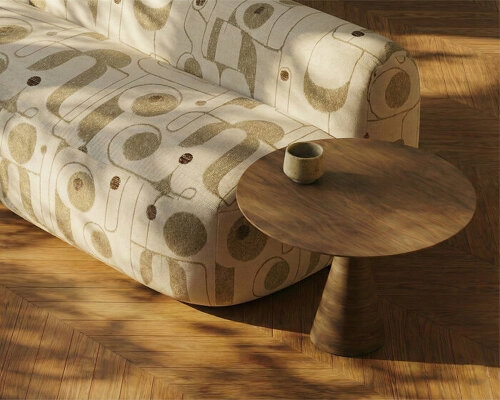
Nature continues to shape the visual language of furnishing textiles, offering a vocabulary of colors, textures, and motifs rooted in the natural world. Earthy tones, warm palettes, and botanical references evoke a sense of balance and continuity, creating interiors that feel both grounded and timeless.
This dialogue with nature is often intertwined with historical references, as designers draw from archives and traditional patterns to create contemporary expressions. Small decorative prints coexist with more expressive statement designs, reinforcing the connection between heritage and innovation. The result aligns closely with the Heritage Forward theme, where past influences are not replicated, but reinterpreted to meet present-day sensibilities.
nature informs aesthetic language
technology expands creative boundaries
Technological innovation, particularly in digital printing, is enabling new levels of creative freedom. Enhanced precision allows for complex constructions, layered textures, and deeper colour saturation, expanding the possibilities of textile design while maintaining high production standards.
These advancements also support greater customization, encouraging designers to move beyond standardized collections toward more distinctive, project specific solutions. This shift is mirrored in the fair’s exhibition design, where Cristina Celestino reimagines the spaces of Villa Erba to ‘restore centrality to the experience of meeting, through a language that dialogues with the architectural identity of Villa Erba and the textile tradition, reinterpreting them with a contemporary sensibility’. As indoor and outdoor boundaries continue to blur, textiles become increasingly adaptable, designed for hybrid environments where comfort, durability, and expression coexist.
digital printing is enabling new levels of creative freedom | image © Audejas
these advancements also support greater customization, encouraging designers to move beyond standardized collections | image © David Walters Fabrics
textiles become increasingly adaptable, designed for hybrid environments | image © Martinelli Ginetto
the fair continues to position itself as a meeting point for creativity, industry, and market forces | image © Viganò
project info:
event: Proposte 2026 | @propostefair
dates:May 5-7, 2026
location: Villa Erba – Centro Internazionale Esposizione e Congressi, Largo Luchino Visconti, 4, Cernobbio CO, Italy
The post woven futures: heritage shapes the next chapter of furnishing textiles at proposte 2026 appeared first on designboom | architecture & design magazine.